first step in physics volume 2 zambak top

TABOO

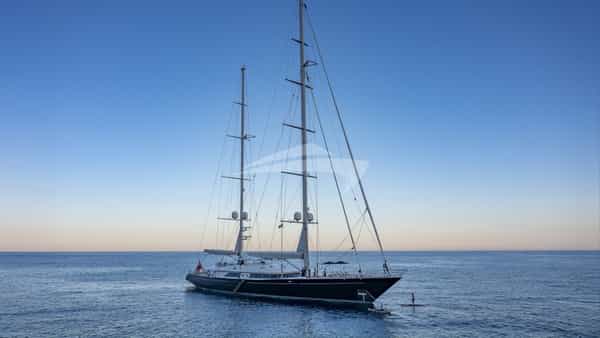
1994 Aquastar Guernsey C.I  81футов / 24.7м

10Гости
5Каюты
4Экипаж

Частная яхта

Недоступно

Альтернативные яхты

First Step In Physics Volume 2 Zambak Top Apr 2026

Mathematical preparation Volume 2 requires and builds mathematical tools: calculus (differentiation and integration in physical contexts), ordinary differential equations for oscillators, basic vector calculus for fields, and linear algebra concepts where appropriate. Appendices or integrated “math boxes” refresh necessary techniques and show how math translates into physical prediction.

Laboratory and experimental emphasis Bridging theory and experiment is crucial. Guided labs—measuring g with a pendulum, characterizing resonance and damping, verifying conservation laws in collisions, measuring specific heats—train students in uncertainty analysis and data interpretation. Simple computer simulations and data-logging projects extend experiments beyond classroom constraints. first step in physics volume 2 zambak top

Problem-solving and worked examples A strong Volume 2 stresses problem-solving strategy: identify knowns/unknowns, choose conservation laws, construct free-body or field diagrams, and check limiting cases. Worked examples demystify multi-step solutions and highlight common pitfalls—sign errors, unit inconsistencies, and invalid approximations. End-of-chapter problems should include conceptual questions, numerical practice, and challenge problems encouraging modeling and estimation. Guided labs—measuring g with a pendulum
Mathematical preparation Volume 2 requires and builds mathematical tools: calculus (differentiation and integration in physical contexts), ordinary differential equations for oscillators, basic vector calculus for fields, and linear algebra concepts where appropriate. Appendices or integrated “math boxes” refresh necessary techniques and show how math translates into physical prediction.

Laboratory and experimental emphasis Bridging theory and experiment is crucial. Guided labs—measuring g with a pendulum, characterizing resonance and damping, verifying conservation laws in collisions, measuring specific heats—train students in uncertainty analysis and data interpretation. Simple computer simulations and data-logging projects extend experiments beyond classroom constraints.

Problem-solving and worked examples A strong Volume 2 stresses problem-solving strategy: identify knowns/unknowns, choose conservation laws, construct free-body or field diagrams, and check limiting cases. Worked examples demystify multi-step solutions and highlight common pitfalls—sign errors, unit inconsistencies, and invalid approximations. End-of-chapter problems should include conceptual questions, numerical practice, and challenge problems encouraging modeling and estimation.

Спецификация

Название яхтыTABOO
Скорость (крейсерская)18кмч / 9.7узлы
Скорость (макс)40кмч / 21.6узлы
Расход топлива (крейсерский)15лф / 4gph
КорпусОднокорпусной
ФлагВиргинские о-ва (Великобритания)
Запущен1994
Переоборудованные2016
СтроительAquastar Guernsey C.I
ДизайнерDoug Peterson